Most of us suffer from a lack of time. Although this is a huge mental shortcut. We simply have too many things on our to-do lists, too many interests, and we sleep „too much.” And we often can’t rest „effectively.” On the one hand, we’re aware of how important rest is to have the energy to act, but on the other, we have so little time left after work, and we also want to finally do something „for ourselves” instead of going to bed early (although that would also be something we do for ourselves and our bodies). We try various solutions, but despite everything, we often wake up tired. This, in turn, worries us and stresses us out because we haven’t rested properly. And so on.
I generally feel that from a certain point in life – I think it’s when we finish our education and start working – we always have to choose. And do something at the cost of something else. Time for ourselves or time spent with family. When we lose our job, should we immediately look for a new one and spend hours in front of the computer preparing our CVs? Should we give ourselves time to rest (but in a way that the thoughts about our lack of job don’t come back – and how can we do it?)? Or, after a busy day, how should we spend our evenings? Should we dedicate 20-30 minutes to stretching exercises, watch a relaxing movie, read a book, or perhaps just go to bed early? And what’s more, choose such option that doesn’t make us feel guilty.
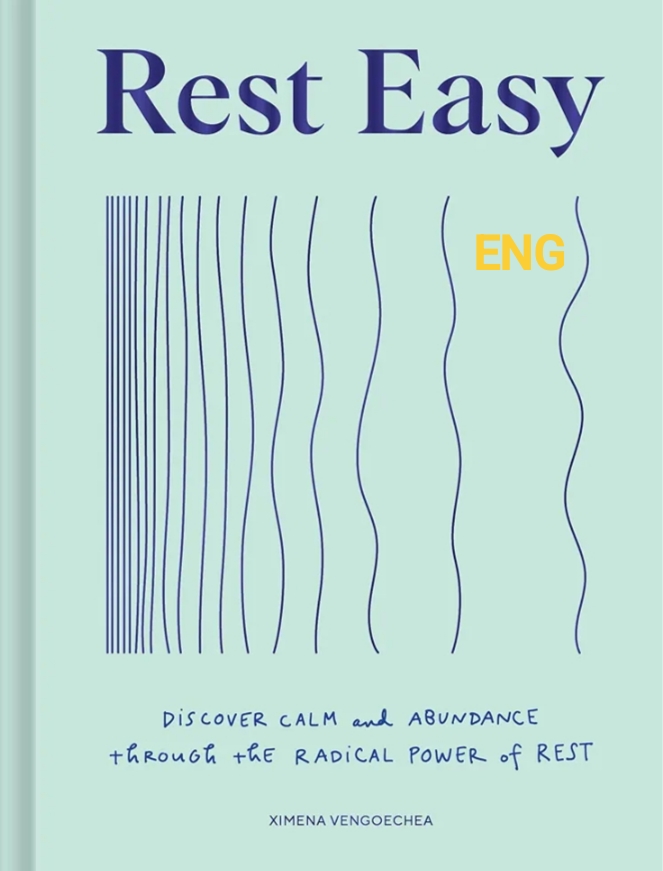
When I came accross Ximena Vengoechea’s book „Rest Easy. Discover Calm and Abundance Through the Radical Power of Rest”, I thought this might be it! I should reach for literature and research to learn how to rest more effectively. Right at the beginning of the book, the author recalls her experiences that led her to work on the book. She had three jobs: working at a tech company in a toxic environment, making her debut as an author, and, on top of that, becoming a mother. Undoubtedly she’s a character most of us can identify with. You can’t (or wouldn’t) simply give up any of these jobs, but staying with the status quo isn’t a good option either. Ximena decided to quit her job (she had the comfort of savings and a partner who could support the family). The plan was: free herself from the toxic work environment, rest, and re-enter the job market in six months at most.
I think many of us think about implementing such a plan, and some even did. But then reality came to Ximena’s life. It turned out that quitting her job didn’t bring the expected energy. She was still the same tired woman, just without a job. At that moment, I couldn’t wait to read the next pages to learn how to tackle such a problem, once… the theoretical cause of fatigue had been eliminated. On the following pages, we find information that watching movies, doing nothing, or a two-week vacation by the pool isn’t relaxation. It’s better to choose the forest, birds, puzzles, or meditation. Then there’s more “revelatory” information about how we’re in a better mood when we’re well-rested, while without proper rest, we’re irritable and angry.
I think that anyone who picks up a book about rest has already tested many methods and knows exactly that rest is important. Drawing it out and colorful graphs won’t change our beliefs. The book also graphically illustrates the effects of inadequate rest, along with advice like: take a break from your phone (ideally, do a regular daily detox), distance yourself instead of getting upset, and practice various forms of meditation. And of course, don’t wait to rest when you’re tired; implement it here and now. Of course, all of this is important, but… for most of us, it’s unrealistic to implemented. And not because we’re poorly organized, but because we want to experience and live a lot in life. And at the same time, we have a sense of responsibility and daily tasks to complete.
Throughout the entire book, I waited for the continuation of Ximena’s story. A woman, who after quitting her job in a toxic environment, regenerated, gained new strength, and returned to work after the six months as she planned to. I was genuinely curious how she managed to distance herself and not to worry about the lack of work and a stable income. I wanted to learn from her how to simultaneously take care of yourself, physical and mental well-being, while also improving your qualifications, looking for a job, and not doubting in yourself when recruiters don’t call. I didn’t find any of that in this book.
Ximena once again included a bit of her experiences in the “Conclusion” chapter – as an “interlude” to all the research and good advice on effective rest. On page 242 of the book (out of 248 pages!). The book can (and should) be treated as a collection of theories on relaxation and suggestions for spending “free” time. Useful to organize your knowledge or for those seeking inspiration for a new hobby. But I didn’t find anything groundbreaking here. Too bad. High expectations before reading, and equally significant disappointment afterward.
Has anyone read this book? I’m curious to hear your impressions 🙂